Whether you’re planning a wedding, booking a family session or need new photos for your business, choosing a photographer can feel like a leap of faith. Every website looks polished, prices vary widely, and you have to commit before you’ve seen a single photo of your own.
The good news is that you don’t need to know anything about cameras to choose well. Knowing how to choose a photographer comes down to a simple process: work out what you need, find people who specialise in it, look closely at their work and get everything agreed in writing.
This guide takes you through each step, from your first search to signing the booking. It works for any kind of photography, and points you to our more detailed guides along the way.
How to choose a photographer in nine steps
Work through these in order. Each step narrows the field, so by the end you’re choosing between two or three people you’d be happy with, not fifty strangers.
1
Decide what you need photographed
Before you look at a single portfolio, write down the basics: what the photos are for, the date or rough timing, the location, how many people are involved and how long you think the shoot will take. If the photos are for a business, note where you’ll use them – your website, social media, printed brochures or packaging.
This short brief saves time on both sides. Photographers can tell you straight away whether they’re available and suitable, and every quote will be based on the same information, which makes them far easier to compare later.
It also helps to save five or ten photos you love, from anywhere, so you can show people the look you have in mind.
2
Work out your budget
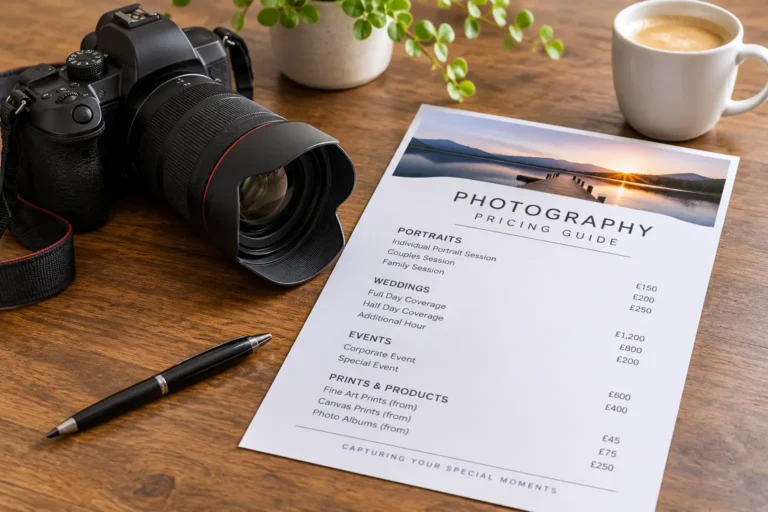
Prices vary widely between countries and regions, and with the type of shoot and the photographer’s experience. Looking at the pricing pages of a few local photographers will give you a feel for the typical range where you live.
Our guide to how much a photographer costs explains what drives the price.
Remember that the time you see on the day is only part of the job. Planning, travel, editing and delivery all happen behind the scenes. Set a figure you’re comfortable with, but treat it as a guide rather than a hard cut-off for now – a slightly higher quote can turn out to be better value once you see what’s included.
3
Find photographers who specialise in your type of shoot
Photography is a broad field. Someone who takes beautiful landscapes may have little experience of directing a lively family of five, and a great wedding photographer isn’t automatically the right choice for product shots on a white background.
Look for people who specialise in, or regularly take on, the kind of work you need. You can search our directory by country and type of photography to see who works near you, and recommendations from friends, colleagues or your venue are worth following up too. Choosing someone local often means lower travel costs and a photographer who already knows the area’s best spots.
Aim for a shortlist of five or six names before you go any further.
4
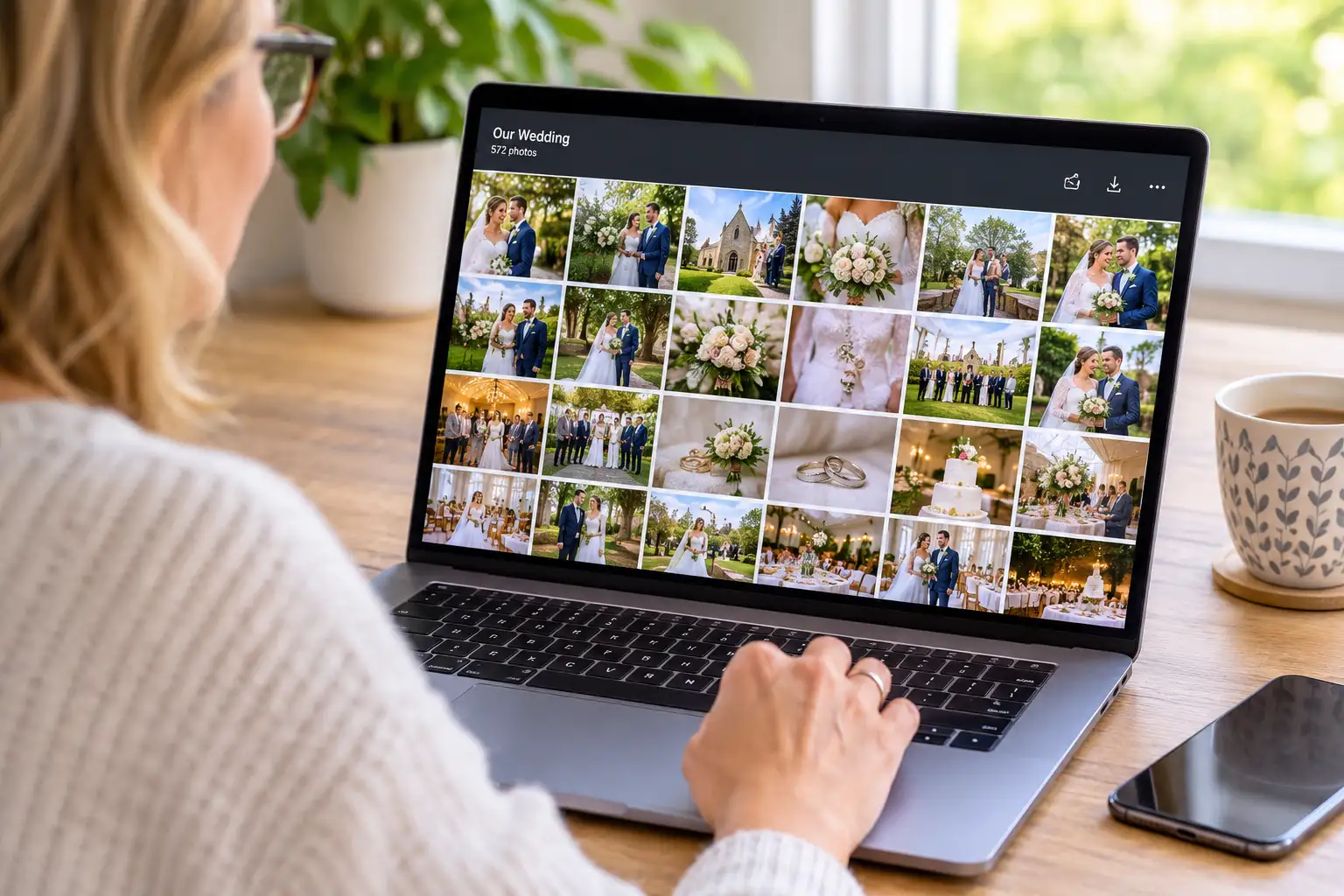
Look at full galleries, not just the highlights
A portfolio shows a photographer’s best images from many different shoots. What you really want to know is what they deliver on an ordinary day.
Ask each photographer on your shortlist to share one or two complete galleries from shoots like yours. Look for consistency: is the colour and editing style the same throughout, are faces sharp and well lit, and do the quieter moments look as good as the headline shots? If a full gallery looks as good as the portfolio, you can be confident about what you’ll receive.
Some clients ask for their photos to stay private, so a photographer may not be able to share every gallery. Most will have at least one they can show you.
Finally, check that their style matches the photos you saved in step one. A photographer known for light, airy images is unlikely to deliver dark and moody ones just because you ask.
5
Read reviews and check their reputation
Reviews tell you what it’s like to work with someone, which a portfolio can’t. Look at the photographer’s Google Business Profile, their social media pages and any other review sites they use, and start with the most recent.
Look for patterns rather than single comments. Praise for clear communication, punctuality and delivering on time matters as much as praise for the photos. One unhappy review among many good ones is normal – what counts is how the photographer responded to it.
6
Get in touch and ask the right questions
Now contact your shortlist with the brief from step one. How quickly and clearly each photographer replies tells you a lot about how they’ll handle the rest of your booking.
The questions that matter most for any shoot are:
- Are you available on our date, and for how long?
- What’s included in the price, and what costs extra?
- How many edited photos will we receive, and when?
- How will the photos be delivered, and can we print and share them?
- What happens if you’re ill or can’t make it on the day?
For a business shoot, also ask what you’re allowed to use the photos for and for how long. This is known as the image licence or ‘usage rights’. Getting it clear now avoids an awkward conversation later.
For a fuller list, see our questions to ask a wedding photographer.
7
Compare quotes like for like
Every photographer packages their work differently, so two quotes with similar totals can include very different things. Put them side by side and check the same points for each.
What to check
Why it matters
Hours of coverage
Decides how much of the day or event is photographed
Number of edited photos
Tells you what you’ll actually receive
Delivery time
Some photographers deliver within days, others take several weeks
Travel costs
Often extra, especially for photographers based further away
Extras
Prints, albums, a second photographer or a pre-shoot meeting may or may not be included
Usage rights
How you’re allowed to use the photos, which matters most for business shoots
Payment terms
When the deposit and balance are due
The cheapest quote isn’t always the best value, and the most expensive isn’t automatically the best. Choose the one that covers what you need, from someone whose work you love.
8
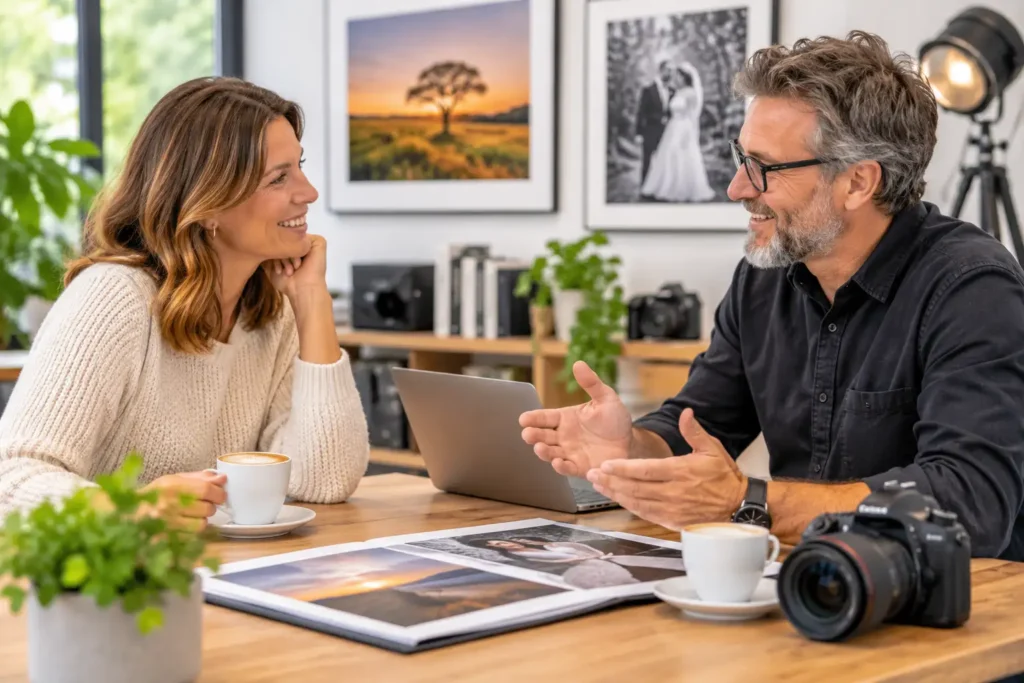
Talk before you book
If you can, have a short call, video chat or meeting with your first choice. You’ll be spending time in front of their camera, so it helps to feel at ease with them.
Notice whether they ask about you and what you want, or simply run through their packages. A good photographer will have ideas of their own, and will be honest if something you’ve asked for isn’t realistic.
9
Read the contract and pay the deposit
A professional photographer will send a written contract or booking agreement before you pay. Read it properly, and check it covers:
- the date, times and location
- what you’ll receive, and by when
- the total price and when each payment is due
- the cancellation and rescheduling terms
- who owns the copyright, and what you can do with the photos
Most photographers ask for a deposit, sometimes called a retainer, to secure your date, and it’s often non-refundable. That’s fair: once your date is booked, they turn away other work for it. Make sure you understand the cancellation terms before you pay, not after.
In many countries the photographer keeps the copyright by default and gives you a licence to use the images, but the rules vary from place to place. If anything in the contract is unclear, ask the photographer to explain it. For a large booking, it can be worth checking the contract with a local legal adviser or consumer advice service.
Red flags to watch for
Most photographers are reliable professionals, but a few warning signs are worth taking seriously. Think twice if a photographer:
- won’t send a written contract, or keeps putting it off
- can’t show you a single complete gallery
- pushes you to pay in full straight away, or to book “today only”
- is vague about what’s included or when you’ll get your photos
- is slow or patchy with replies before you’ve even booked
- won’t give you an invoice or receipt for your deposit
Your photographer checklist
Print this out or save it to your phone, and tick off each point as you go.
- Write a short brief: what, when, where, who and how long
- Save five to ten photos in the style you like
- Set a rough budget
- Shortlist five or six photographers who specialise in your type of shoot
- Ask each for one or two full galleries
- Read recent reviews
- Send your brief and ask the key questions
- Compare quotes on the same points
- Talk to your first choice
- Read the contract before you pay the deposit
Frequently asked questions
How far in advance should I book a photographer?
It depends on the type of shoot and the time of year. Weddings and dates in a photographer’s busy season are often booked many months ahead, while a portrait or business shoot can sometimes be arranged within a few weeks. If your date is fixed, start looking as soon as you know it.
Do I need to meet the photographer in person?
Not necessarily. A phone or video call works just as well for getting a feel for someone and talking through your plans. For a wedding or a complex business shoot, some photographers also offer a visit to the location beforehand.
Can I ask for the RAW files?
RAW files are the unprocessed image files straight from the camera, before any editing. Many photographers don’t supply them, because the edit is part of their style and the finished product you’re paying for. Some will provide them for an extra fee, so if they matter to you, ask before you book.
What should we wear for our photos?
Choose clothes you feel comfortable in, in colours that sit well together rather than matching exactly, and avoid large logos or busy patterns. Your photographer will usually be happy to advise. Our guide to what to wear for family photos goes into more detail.
What if I’m not happy with my photos?
Talk to the photographer first, calmly and specifically, and refer to what your contract says you’ll receive. Most problems are easier to solve than they first seem, and many photographers will re-edit images where a reasonable request falls within the agreement. Agreeing expectations clearly at the booking stage is the best way to avoid disappointment.
Final thoughts
Choosing the right photographer is mostly a matter of doing a little homework before you commit. Be clear about what you need, judge people on complete galleries and how they treat you, and make sure everything is agreed in writing. Do that, and you can relax on the day and leave the photos to them.
Ready to start your shortlist? Find a Local Photographer lists photographers around the world, so you can search by location and type of photography and contact them directly, with no middlemen.